You'll be able toKnow who takes the other side of your trade, what it costs before price moves a tick, and why your instrument decides how precisely you can size.
Almost every trader starts in the middle: a strategy, a broker, a chart. This part starts underneath that, at the mechanics nobody explains because they are not exciting enough to sell.
By the end of it you will know what you are actually buying when you place a trade, who is on the other side of it, what it costs you before the market has moved a single tick, and why the instrument you choose quietly decides how precisely you can manage risk later.
The pointYou begin every trade behind. An edge is not what makes you money, it is what has to be big enough to pay the costs first and still leave something over.
- 0.1
What trading actually is
Trading as a probabilistic edge business rather than an act of prediction. Speculation against investing, and the uncomfortable question of who has to lose for you to win. Why the spread, commissions and financing make this negative-sum before anyone is right about anything.
Edge, definedSpeculation vs investingThe negative-sum reality
- 0.2
The markets you can trade
Forex majors and minors and why retail is funnelled there first. Indices and the difference between an index CFD and an index future. Commodities and how gold and oil actually behave. Crypto, its volatility, and where it fits with prop firms. Then why this program lives on index futures.
FXIndicesCommoditiesCrypto
- 0.3
Why price moves
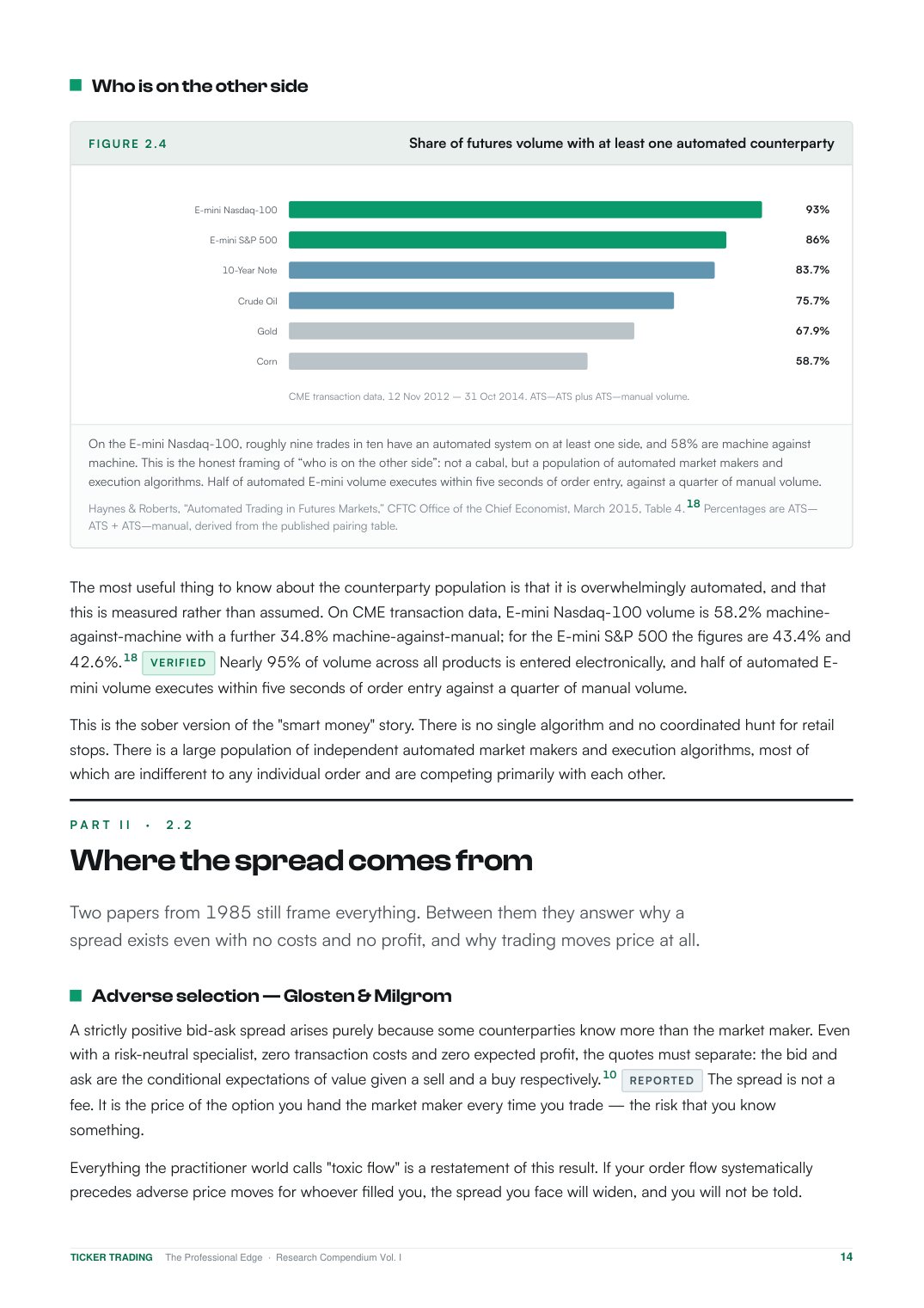
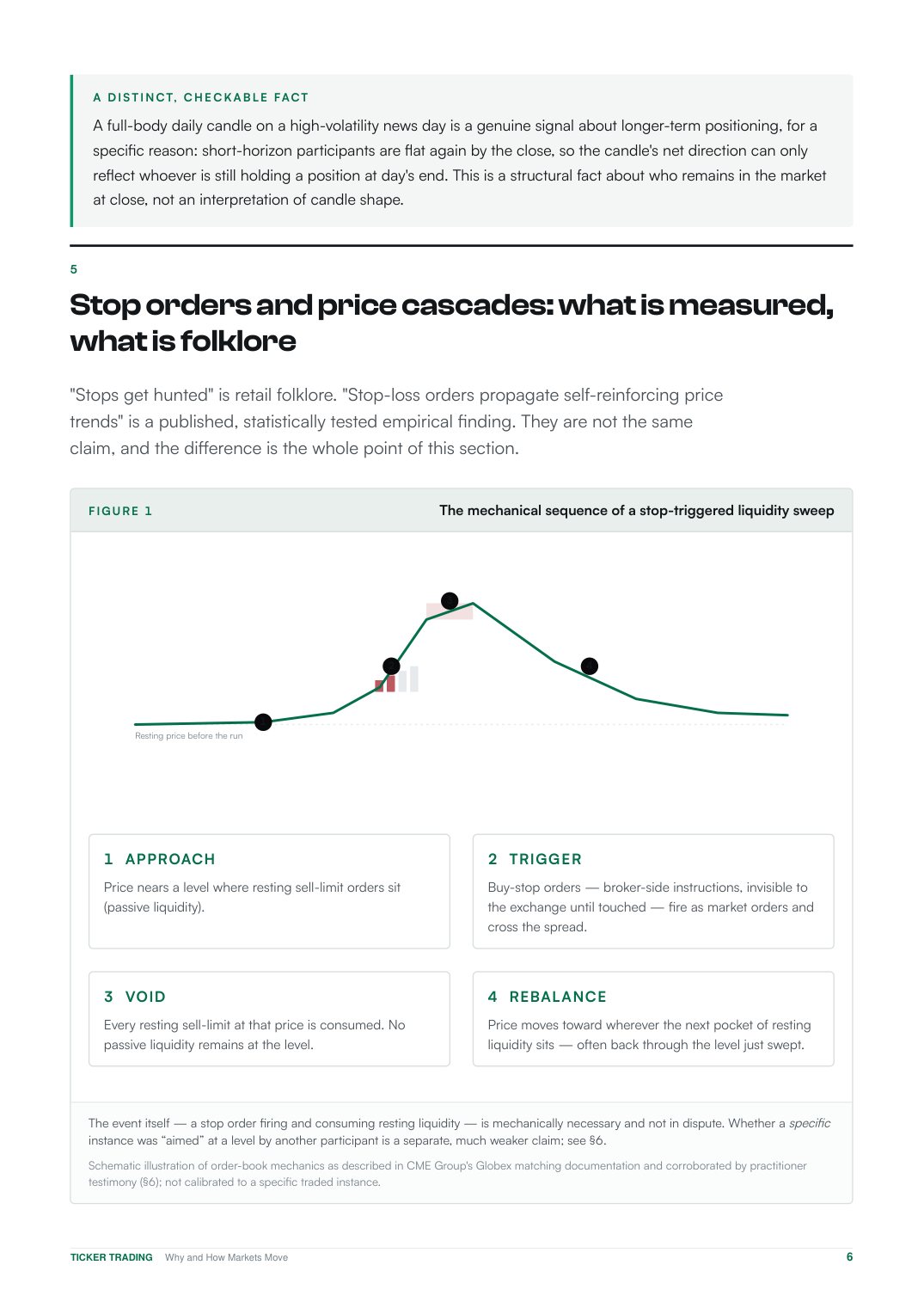
Buyers, sellers, order flow and liquidity, described without mysticism. Who the participants are and what each of them is actually trying to do. The honest version of 'smart money' and liquidity: what is real market structure and what is retail folklore sold back to you.
Order flowParticipantsLiquidity, honestlyNews drivers
- 0.4
How you get exposure
Spot and CFDs: leverage, overnight financing, and how your broker makes money from your activity. Futures: contracts, expiry, tick value, and what exchange-traded actually changes. Options in one lesson, named rather than taught. Then the comparison that decides your life: cost, leverage, sizing granularity and prop-firm fit.
CFDsFuturesTick valueSizing granularity
- 0.5
Trading styles, matched to your life
Scalping, day trading and swing trading compared by the things that actually determine whether you can do them: screen time, capital, and temperament. Then the constraint nobody mentions until it is too late, which is how each style interacts with prop-firm rules.
Scalp / day / swingScreen timeTemperament
- 0.6
The realistic starting stack
TradingView and what charting software does and does not do for you. What a broker is and how to choose one. What prop firms are and why they exist at all, at a level deep enough to be useful now and revisited properly in Part 06.
TradingViewBrokersProp firms